Collaborating
 I am a systems thinker who models flexibility and relationship-building in classrooms and professional development, knowing the importance of planning and practicing a balance of technical and adaptive approaches for effective teamwork. I focus on understanding both the ‘how’ and ‘why’ of learning, and believe educators are guides and mediators for helping each and every student thrive. My experience as a creative thinker and active listener is shaped by collaborations with many educators. I am always a learner. Building relationships across the learning community is central to my practice. Leadership guides the learning community, with instructional coaches serving as implementors. As a consultant, I mediate as part of the team to recognize and nurture individual strengths, fostering a thriving learning community that believes in every student. References from educators, paraprofessionals, principals, academic coaches, directors, colleagues and superintendents are available upon request.
The content on this webpage includes:
- The How and Why
- Collaborations in Action
- Qualitative Research
- Skills
- Software Applications and the Integration of Artificial Intelligence
The How and Why
Collaboration • Communication • Community
Andragogy — teachers learning with one another, the andragogy of appreciating and learning fro each other’s gifts through peer to peer coaching real time in classrooms with students together stimulating reflective dialogue that creates understanding and paths of action.
Belief • Student Engagement • Amplifying Student Voices
Pedagogy — curriculum and content alive in real life with effective pedagogy believing in the ‘art of teaching’. The art is belief, movements in the learning space, objects within the space and materials part of the learning.
Whole School • The Whole Community • Together
Alliances — we together, as an alliance, crosswalk all knowledge and initiatives to exponentially rise the potential of each educator, each educational leader and every staff member for each and every student.
Belief of Self as a Learner and Educator • Belief of Each Other • As a Team
Team — the ‘TEAM’ includes everyone in the school community impacting the children and youth. We are all students. The educators are the mediators and guides for learning.
The Questions • The Planning • Actions and Practice • Reflective Practices
Inquiry — our questions root from our schema opening pathways to bring creative thinking deeply into our designing structures.
Focus Groups for Reflective Practice • Qualitative Research • Learning a Reflective Practice
Research — our knowledge of how our process is working, and where not, is essential to guide our growth of the whole learning community for the effectiveness of outcomes for each and every child and youth. We improve by knowing that which works and that which needs inquiry and designs for growth of thinking that leads with actions.
Collaborations in Action
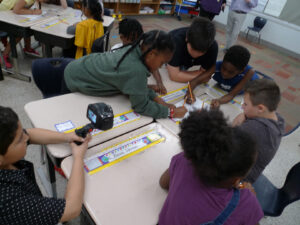
Collaboration begins by listening to the leadership team and educators. I model best practices through interactive professional development and classroom demonstration lessons, fostering dialogue and regular peer observation. The aim is for Professional Learning Teams to lead school-wide improvement. Research shows relationships and open dialogue drive outcomes, helping educators grow and support every student.
Each collaboration is tailored to the school and district, but always focuses on enabling every educator, student, and staff member to flourish.
A brief overview of my skills that I bring to the team effort as a systems thinker and practitioner are:
- mediating the building of relationships (educators ~ students ~ community)
-
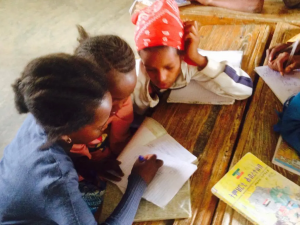
Collaborative Learning • Thinking Schools Ethiopia
demonstrating in classrooms high operational practices with students for high intellectual performance - demonstrating in classrooms to stimulate professional dialogue between educators
- model pedagogy and critical thinking strategies in staff professional development and with students
- use of critical thinking methods and models
- share real time strategies, methods, models and understanding of effective pedagogy (engaging each and every student)
- practical strategies and methods for immediate use across all grade levels (PreK, K-12) and all content areas
- I meet you with your curriculum and crosswalk with current and previous initiatives part of the school and district’s focus
- crosswalk with school and district initiatives to support how they interconnect effectively in the best interests of students through the best efforts of educators
- have fun
- be serious with practice and practicing
- be a community together with each student in mind
I have led and collaborated on school and district initiatives with documented qualitative and quantitative outcomes. My core belief is in the potential of every student and educator. I prioritize reflective practices and qualitative documentation to support positive growth. My website and CV showcase examples of these collaborations and initiatives. My strengths include relationship-building, a positive outlook, and facilitating effective teamwork for meaningful results. References from superintendents, principals, directors, educators, and paraprofessionals are available upon request.
Critical Thinking Guide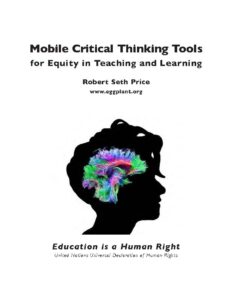 Critical thinking methods are essential for authentic student engagement, which motivates educators and strengthens learning communities. This environment should exist for all students, in every school and district. Equity is rooted in belief and belonging for all students, supported by culturally validating pedagogy.
The guide includes:
- Collaborative Processes
Students collaborative learning, Teachers peer to peer coaching, Leaders leading whole school community building - Visual Tools
As a language for organizing our thinking: open source mapping, concept mapping, Thinking Friends, Thinking Maps - Frame of Reference
Our cultural frame of reference is our identity - Inquiry Models
Powerful Questions for Priming and Shared Inquiry (Socratic Seminar) for Depth and Understanding - Thinking Environments
Belief and Belonging, People, Materials, Objects
Research
- Qualitative research (2024) of the six schools in the Osseo Area Schools district in Minnesota with focus groups of 100 interviews I conducted with educators and students K-5, and colleague Regina Seabrook coded and wrote the findings:
—one page overview
—full research - Vignette written by the school leadership team at one of the whole school participating Osseo Area Schools part of the recently published Columbia Teachers College Press book “Equitable Literacy Instruction for Students in Poverty”.
—Recent vignette PDF document
—more on the book “Equitable Literacy Instruction for Students in Poverty” - Interactive Documentation — A Living Record
 (2024)
Interactive documentation I use with educator teams at site visits. It includes educator reflections on the pedagogy model, video clips of my demos, and supporting documents to access. It is both an interactive document for educators to use and documentation. It is created on Apple Freeform and outputted as a PDF document (Nov 2024).
Download the PDF
See more at Fresno Unified, Sunnyside Region Field Guide Page created by Robert.
Skills
- High Operational Practices (i.e., situating learning the lives of students, amplifying student voice, belief in each student)
- Critical thinking methods and strategies that include collaborative communities, inquiry and dialogue, visual cognitive mapping to make thinking visible and for writing, and environment
- Literacy including vocabulary, phonics, writing, reading, inquiry, comprehension, Socratic Seminar, Thinking Maps, concept mapping, and dialogue
- Lesson process and design with the Pedagogical Flow Map
~Priming > Processing > Demonstrating for Understanding~ - Collaborative in dialogue, lesson design, modeling, and implementation with Professional Learning Teams (PLTs)
- Collaborative in peer to peer coaching of teachers coaching teachers in PLCs and in classes
- Students reflecting on the process and purpose of lessons through student led dialogue and writing devices
Software Applications and the Integration of Artificial Intelligence
In addition to my expertise as an educator and education consultant, I possess a robust skill set in software applications and the integration of artificial intelligence within educational environments. I am proficient in Microsoft Word, Excel, PowerPoint, Final Cut Pro, Adobe Premiere, Acrobat, InDesign, Illustrator, Photoshop, Google Workspace, Filmic Pro, Keynote, WordPress, HTML, Ecamm Live, Whisper Transcription, ESRI GIS mapping, Zoom, and Teams. Additionally, I possess advanced proficiency with Microsoft 365 Co-Pilot, a leading AI solution recognized for its security, ethical standards, and innovation. Video expertise includes iPhone, Nikon mirrorless camera, GoPro, external microphones wired and wireless, and software for editing.
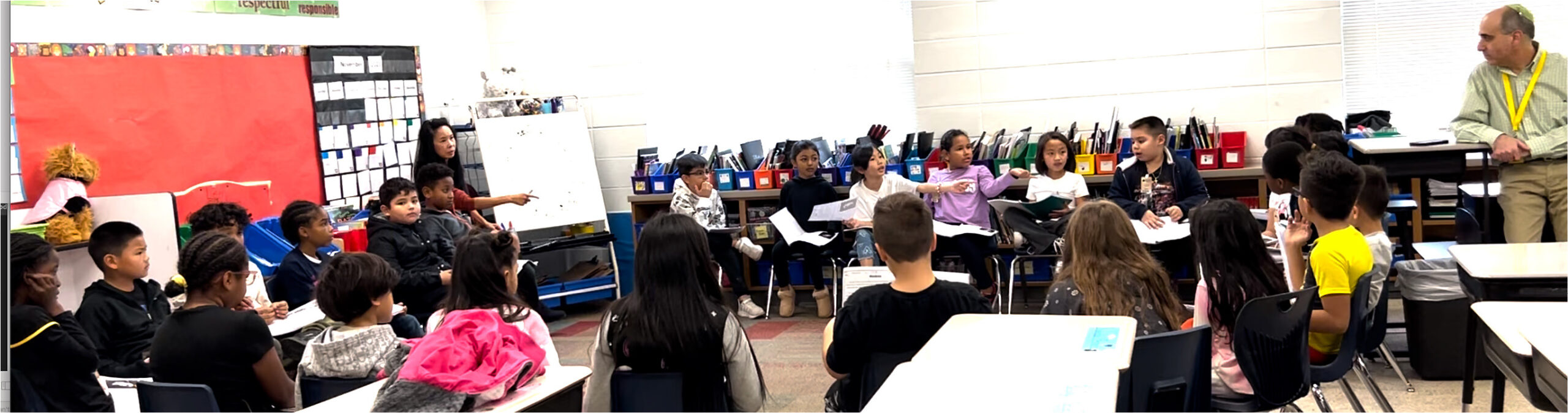
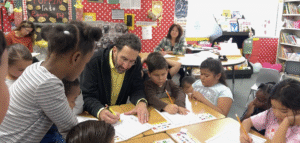
Socratic Seminar (Shared Inquiry) in a third grade classroom. Whole school implementation includes Socratic Seminar at all grade levels K-5 mediated by the students. The Instructional Coach in collaboration with the teacher who is a master at mediating the students mediating themselves with the Socratic Seminar. See video clips of this class and a kindergarten class on the The Socratic Seminar / Shared Inquiry in Action webpage.